Iri Ji — The New Yam Festival
Iri Ji — literally 'eating new yam' — is the annual harvest thanksgiving that anchors Igbo cultural life. From the first yam cut by a titled elder to Iri Ji nights in diaspora living rooms, the festival is the Igbo argument for continuity.
Iri Ji, literally "eating new yam" in the Igbo language, is the annual harvest thanksgiving that anchors Igbo cultural life. Celebrated between August and October — the precise date set by each community's elders — it marks the moment the new yam is declared fit to eat, and with it, the closing of one farming season and the opening of the next.
The saying "ji bu eze" — "yam is king" — is more than a proverb. Among Ndi Igbo, the yam has long been the measure of a man's industry, the staple that fills the barn, and the offering that honours both the living and the ancestors. To eat the new yam before Iri Ji is to invite the anger of the soil. To share it during Iri Ji is to renew the bond between the family, the community, and the land.
The first yam must be cut by a titled elder
In many communities the festival is led by the oldest titled man in the village — often the Igwe, the Nze, or the Okwu — who walks into his farm at dawn and cuts the first tuber. The yam is then roasted, shared with the family, and laid at the foot of a shrine as an offering to the ancestors. Only after that first cutting is the new yam considered open to the wider community.
The day's rhythm is well known. Families roast yams and serve them with palm oil, pepper sauce, and freshly prepared ugba (oil bean). Kola nuts are broken and presented to guests. Drums — udu, ekwe, and ogene — sound at intervals. In some towns masquerades dance through the village square; in others, age-grade groups organise wrestling matches and foot races. The day ends with feasting and, in many homes, the retelling of folktales that explain why the yam, and not the cassava, wears the crown of Igbo staples.
The market-day reckoning
Timing is decided by the four-day Igbo week: Eke, Orie, Afo, and Nkwo. Communities choose one of these market days as their Iri Ji, and the cycle returns every year. For a diaspora family or town union, the chosen day often falls on a weekend so members can travel and gather without disrupting the working week.
This reckoning is more than a calendar. It is a quiet test of cultural memory — proof that the people of that town still know how to read time the way their grandparents did, in the rhythm of the market and the moon rather than the rhythm of the working week.
Iri Ji in the diaspora
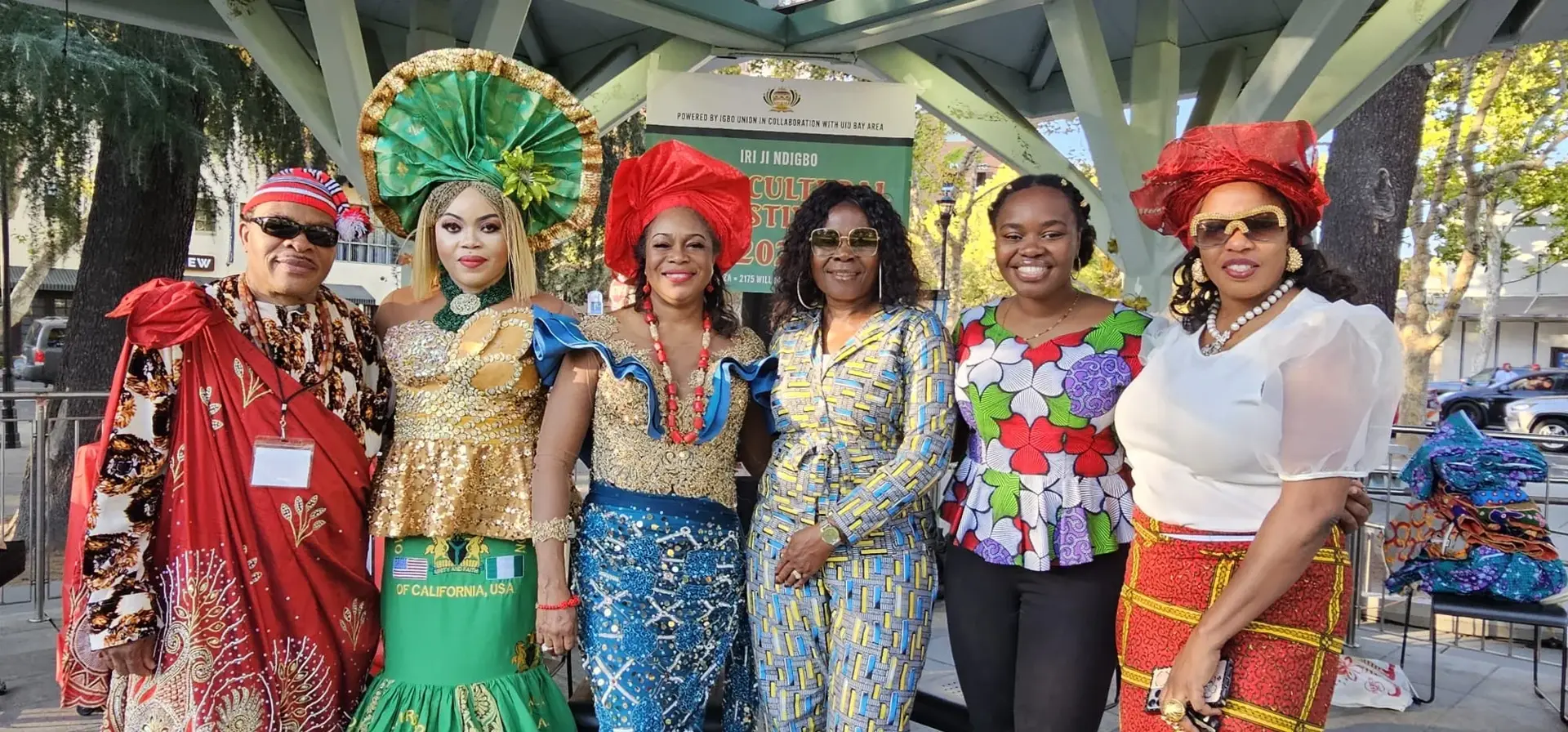
In Northern California and across the wider diaspora, Iri Ji has become one of the most resilient of Igbo traditions. Town unions, age grades, and cultural associations host the festival in community centres and rented halls, importing yams by air or sourcing them from local African markets. The masquerade may be a recorded drum track; the kola nut may be flown in from Enugu. But the meaning — gathering, thanksgiving, and the re-tying of the cord between the homeland and the host community — remains intact.
Children who have never set foot in a village farm learn to peel roasted yam with their fingers and to answer "Iri Ji" when an elder asks what the family is celebrating. Some Igbo Union members have folded the festival into the wider Igbo Cultural Festival; others keep it close to home, holding it in a member's living room. Both belong to the same tradition: the yam is new, the year is acknowledged, and the people are together.
Why Iri Ji still matters
Iri Ji is, at its heart, an argument for continuity. In a year of migration, displacement, and rapid change, the festival insists that the harvest is still a matter of communal pride; that the elder still cuts the first yam; that the drum still sounds; that the family still gathers around a shared table. It is a refusal to let the rhythms of the market and the city replace the rhythms of the soil.
A people who remember how to share a new yam, the saying goes, have not yet forgotten how to share anything else.
For Ndi Igbo — at home and abroad — Iri Ji is the moment that proverb is made good.